

Understanding Therapeutic Exercise
Therapeutic exercise is crucial in physical therapy for musculoskeletal injuries. It aids pain reduction, enhances mobility, and prevents future injuries. Learn about its types, benefits, and supporting evidence.
What is Therapeutic Exercise?
Physical therapy is a cornerstone in the rehabilitation of musculoskeletal injuries, aiming to restore function, alleviate pain, and prevent future injuries. Among the various techniques employed, therapeutic exercise stands out as a fundamental component. This article delves into the significance of therapeutic exercise in physical therapy, exploring its benefits, types, and the evidence supporting its efficacy.
Understanding Therapeutic Exercise
Therapeutic exercise encompasses a broad range of physical activities designed to restore and enhance physical function. These exercises are tailored to address specific impairments, functional limitations, or disabilities, with the ultimate goal of improving overall health and well-being. Common types of therapeutic exercises include:
· Range of Motion (ROM) Exercises: Aimed at maintaining or improving the movement of joints.
· Strengthening Exercises: Focused on enhancing muscle strength.
· Stretching Exercises: Designed to improve flexibility.
· Balance and Coordination Exercises: Intended to enhance stability and prevent falls.
· Aerobic Conditioning Exercises: Aimed at improving cardiovascular endurance.
Benefits of Therapeutic Exercise
The implementation of therapeutic exercise in physical therapy offers numerous benefits, including:
· Pain Reduction: Regular, targeted exercises can alleviate pain by strengthening muscles and improving joint function.
· Improved Mobility: Enhancing flexibility and strength leads to better movement and function.
· Injury Prevention: Strengthening muscles and improving coordination reduce the risk of future injuries.
· Enhanced Quality of Life: Improved physical function contributes to better overall health and well-being.
Evidence Supporting Therapeutic Exercise
Numerous studies have demonstrated the efficacy of therapeutic exercise in managing various conditions:
· Low Back Pain: A systematic review by Hayden et al. (2005) found that exercise therapy is effective in decreasing pain and improving function in adults with chronic low back pain.
· Osteoarthritis: Fransen and McConnell (2008) reported that land-based therapeutic exercise provides benefits in terms of reduced pain and improved physical function for people with knee osteoarthritis.
· Stroke Rehabilitation: A Cochrane review by Saunders et al. (2020) concluded that physical fitness training after stroke improves physical fitness and mobility.
Implementing Therapeutic Exercise in Physical Therapy
The success of therapeutic exercise depends on a personalized approach tailored to the individual's specific needs and goals. Physical therapists assess the patient's condition and design an exercise program that considers factors such as age, fitness level, and the nature of the injury or condition.
Conclusion
Therapeutic exercise is a vital component of physical therapy, offering a non-invasive and effective means to restore function, reduce pain, and enhance quality of life. The evidence supporting its use is robust, underscoring its importance in rehabilitation programs. By engaging in a structured therapeutic exercise regimen, individuals can achieve significant improvements in their physical health and overall well-being.
References
· Fransen, M., & McConnell, S. (2008). Exercise for osteoarthritis of the knee. Cochrane Database of Systematic Reviews, (4).
· Hayden, J. A., van Tulder, M. W., Malmivaara, A., & Koes, B. W. (2005). Exercise therapy for treatment of non-specific low back pain. Cochrane Database of Systematic Reviews, (3).
· Saunders, D. H., Sanderson, M., Hayes, S., Johnson, L., Kramer, S., & Carter, D. D. (2020). Physical fitness training for stroke patients. Cochrane Database of Systematic Reviews, (3).
Train Your Brain - Enhancement of Cognition
Being able to store endless amounts information and sift through it within seconds would be a dream come true of any person. With every new piece of information readily available for quick recall it would be the ideal optimized brain. Are we set with the cognitive abilities we already have?
Enhancement of Cognition
By: Scott Lynch, MPT, PT and Sherri Collins
Abstract
Just about every human being would like to acquire quick recall and store vast amounts of knowledge in their long-term memory. How can we tap into our inner abilities and accomplish great things? Being able to store endless amounts information and sift through it within seconds would be a dream come true of any person. With every new piece of information readily available for quick recall it would be the ideal optimized brain. Are we set with the cognitive abilities we already have? Can we strengthen connections? There are many neuroscientists and others alike that have explored the ways in which an average person can increase their cognition. New science is saying that we aren’t fixed in our cognitive abilities. If you really want to get better at something, perhaps an area of math or even science, you can. If you aren’t particularly strong in an area, you can enhance those regions of your brain sometimes drastically with a little effort! Before diving into the complexities of this phenomenon, we will discuss the processes that allow us to think and be who we are first. If we understand what’s going on at the cellular level than we will be able to fully appreciate the process of building on these connections.
Introduction
To begin our quest in neural enhancement, let’s explore just what it is and what we are looking at. In our brain we have a vast network of neurons that connect and send messages when appropriately stimulated. These neurons are responsible and are some of the keys to conducting our brain networking. This networking allows us to send messages throughout our body and lets us be able to interact with the world. To explain this further let’s look at how neurons fire and send messages. it starts with a tiny vesicle. It is precisely these “tiny vesicles in the nerve endings that contain chemicals called neurotransmitters; in response to an electrical impulse, some of the vesicles release their contents, which cross the synapse and transmit the impulse to the adjourning neuron.” (Schwartz and Begley, 2014)This is the process in which we carry out messages throughout the brain. Now, let’s narrow down and examine the individual unit, the neuron. These neurons provide us with the ability to complete complex tasks like talking, typing and speaking. This neuron consists of a cell body and as discussed in class is called the “soma”. Here is where all the management takes place for the neuron. Branching out from the soma is the dendrite. The dendrite is a very important piece to the neuron and can be thought to be the messaging center (Schwartz and Begley, 2014). This region of the neuron receives messages from other neurons. At the opposing end of the neuron is the axon. The axon is where messages deport from the neuron. It is these complex features of chemicals and synapses that allows us to think and process information. So, now how can we increase our efficiency in these complex processes? Can we build upon this vast network?
Methods
Building on these neural networks would seem to be a good start. Perhaps even the idea of neurogenesis seems intriguing. So just what do we do? Regarding brain changes, scientific journals suggest that “plasticity, and adaptability could be accomplished by strengthening synapses without requiring structural reorganization.”(Hebb (1949)). Basically, with time and energy we can mold our brain into whatever we want it to become. Plasticity of the brain is saying that with time we can actually change and shape our brain through frequent practice of a particular skill. Think about building muscles. In order to bulk up constant exercise is required. This is true of the brain. Frequent stimulation is needed to strengthen those neural connections. The more diverse experiences one can acquire the better. A study was conducted involving rats in a controlled environment that was highly stimulated. After letting the rats explore, scientists analyzed their brain matter and, after a short period of time they found that the brains of these rats had already changed. Further investigation noted “the largest changes in synaptic organization can be seen in response to placing lab animals in complex (so-called “enriched”) environments.” (Comeau et al., 2010).In these environments the article states there were “no obvious changes in sensory cortex after four days but clear, and seemingly permanent, changes after 14 days.” (Comeau et al., 2010) Through this study it seems evident that the brain does in fact change and adapt. It comes down to the constant feedback of the environment to supply such changes to the brain. To further prove the point another article also reported, “Animal and human research have shown that environmental stimulation is critical for enhancing and maintaining cognitive function. Novelty, focused attention and challenge are essential components of enhancing cognitive function.” (Mahncke et al., 2006a,b; Houillon et al., 2013) We can see that the common theme to building stronger networks boils down to the environment you surround yourself with. Aside from rats, stimulating a human in a particular task works the same way.

A study was conducted to analyze the brains of taxi drivers in London before and after their complex trainings. These taxi drivers are required to remember routes and learn the quickest ways to be able to navigate around town. This is a particular skill set that specifically works on spatial tasks and reasoning. The study found changes in the brains after these drivers completed training. After examining the MRI there was a noticeable increase in grey matter in the hippocampus region which encompasses memory. (Lee, 1998) The table provided shows a bar graph of the pre and post MRI’s of these taxi drivers. The journal article provided on the subject states, “If neurogenesis is what underpins the hippocampal volume change in qualified taxi drivers, it may be related to recruitment of new neurons following neurogenesis.” (Doetsch,Shors2008) To greater detail they also extend to say, “The development of greater communication between neurons in the form of increased synaptogenesis (Kolb B,Toni N, 2003,2007)might also be involved, and proliferation in dendritic arborization, augmenting connectivity between neurons, could in turn increase memory capacity and also lead to volumetric changes.” (McEwen, 1999)This is yet another classification of brain plasticity in the workings. To summarize this more simply, the birth of new neurons and perhaps the increased branching of dendritic extensions from these new neurons can play a role in this grey matter development. The receiving of messages from a neuron goes through the dendritic portion of the cell. And if the branching is increased in this area receiving and sending signals through the brain becomes much more enhanced. This ultimately leads to the person being able to adapt and successfully execute their jobs where they previously had no knowledge! It is intriguing how malleable the brain really is.
Discussion
After having a minimal understanding of the topic beforehand, and in addition to reading new material, it is easy to see what the common solution is regarding brain enhancement. If we are wanting to enhance our brain power in a particular way, we must immerse it in a nourishing environment. This means supplying the brain with diverse activities that stimulate various areas of the brain. The rat study was an excellent example of this. When the rats were placed in a particularly enriched environment their brain matter in fact changed. This is an example of what we call brain plasticity. The ability to adapt and mold our brains is a key factor in allowing us to accomplish great feats. Plasticity gives us a second chance in resiliency in otherwise defeating odds. This is particularly so with the London taxi cab drivers, who previously had no knowledge of the job beforehand. Through frequent studying and application growth was evident. The challenges of learning new material gave rise to increased matter in the brain. So, again the brain is never fixed. It is always changing and adapting based on outside stimulus.
References
Comeau W, Hastings E, Kolb B. Differential effect of pre and postnatal FGF-2 following medial prefrontal cortical injury. Behavioural Brain Research.2007;180:18–27. [PubMed]
Doetsch F., Hen R. Young and excitable: the function of new neurons in the adult mammalian brain. Curr. Opin. Neurobiol. 2005;15:121–128.[PubMed]
Hebb DO (1949) The organization of behavior. (Wiley, New York).Google Scholar
Houillon A., Lorenz R. C., Boehmer W., Rapp M. A., Heinz A., Gallinat J., et al. (2013). The effect of novelty on reinforcement learning.Prog. Brain Res.202415–439. 10.1016/B978-0-444-62604-2.00021-6 [PubMed][Cross Ref]
Kolb B., Gorny G., Söderpalm A.H., Robinson T.E. Environmental complexity has different effects on the structure of neurons in the prefrontal cortex versus the parietal cortex or nucleus accumbens. Synapse. 2003;48:149–153.[PubMed]
Lee D.W., Miyasato L.E., Clayton N.S. Neurobiological bases of spatial learning in the natural environment: neurogenesis and growth in the avian and mammalian hippocampus. Neuroreport. 1998;9:R15–R27.[PubMed]
Mahncke H., Connor B., Appelman J., Ahsanuddin O., Hardy J., Joyce N., et al. (2006b). Memory enhancement in healthy older adults using a brain plasticity-based training program: a randomized, controlled study.Proc. Natl. Acad. Sci. U.S.A.10312523–12528. 10.1073/pnas.0605194103[PMC free article][PubMed][Cross Ref]
McEwen B.S. Stress and hippocampal plasticity. Annu. Rev. Neurosci. 1999;22:105–122.[PubMed]
Schwartz, J. and Begley, S. (2014). The mind and the brain. [Place of publication not identified]: HarperCollins e-Books.
Shors T.J. From stem cells to grandmother cells: how neurogenesis relates to learning and memory. Cell Stem Cell. 2008;3:253–258. [PubMed]
Toni N., Teng E.M., Bushong E.A., Aimone J.B., Zhao C., Consiglio A., van Praag H., Martone M.E., Ellisman M.H., Gage F.H. Synapse formation on neurons born in the adult hippocampus. Nat. Neurosci. 2007;10:727–734. [PubMed]
Table 1. Increase in gray matter of qualified trainees as compared to other groups: Copyright of: Curr Biol. 2011 Dec 20; 21(24-2): 2109–2114. doi: 10.1016/j.cub.2011.11.018Copyright© 2011 ELL & Excerpta Medica
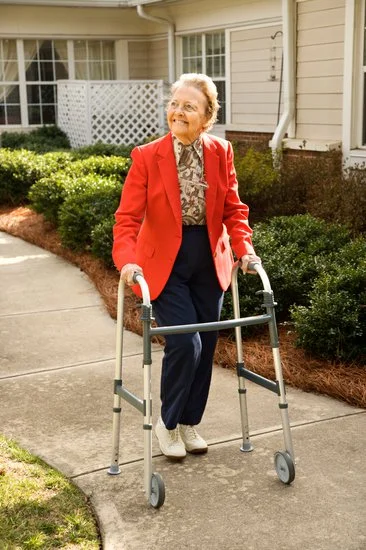
Avoid a Drastic Call; Be Proactive to Prevent a Fall
Falls are one of the leading causes of injury and even death among those older than 65, however recent studies have found that falls can be prevented. The first recommended intervention made by the CDC is gait and balance assessments and training.

By Scott Lynch MPT, PT and Samantha Brazington
June 7, 2018
Falls are one of the leading causes of injury and even death among those older than 65, however recent studies have found that falls can be prevented. The first recommended intervention made by the CDC is gait and balance assessments and training. Falling has become a public health threat as numbers of older Americans grow. Most recently the CDC reported that a senior dies every 20 minutes from a fall related injury, with 27,000 older Americans dying in 2014 from falls.

With these statistics it is clear that seniors over the age of 65 must take an active approach to identifying risk factors early on and then creating meaningful plans to reduce those risk factors. While this issue has many complex factors that contribute to the cause of falls we will focus on the impact of changes in gait and the specific interventions that gait training can have on reducing falls.
Walking is something that most of us take for granted because we do it automatically, however it is a complex motor skill that we learn. Many of us multitask while walking for example, completing chores around our home, picking up items from the floor, and hanging clothing in the closet seem like simple tasks to complete. As we age, however, changes to our gait and our ability to walk occur naturally, Dr. Stephanie Bridenbaugh, from the Basal mobility center gives the following examples: a decreased gait speed, shortened length of stride, toe push off and horizontal heel contact is also impacted. As previously mentioned, walking is a complex motor task, yet generally performed automatically by healthy adults. The attentional demands are therefore minimal. In older adults, age-related neuromotor changes such as reduced motor strength or decreased sensory input (vision, hearing, proprioception) increase the attentional demands needed for walking. This increased demand is met at the cost of a reduction in the central processing capacity for attentional reserve. (Bridenbaugh 2010) These changes seem small and insignificant but they translate into a lack of automatic walking, requiring the older American to focus completely on the task of walking.
Many seniors report a fear of falling, however are often reluctant to discuss their concerns with their doctor for fear of losing their independence, however including your health care providers in the conversation can help gain a better understanding of your current gait and balance needs. The gait assessment completed by a health care professional such as a physician, physical therapist, or nurse should include observation during ambulation, spatial-temporal analysis with specific measurements, cognitive-stress assessment, and a dual-task paradigm assessment. (Bridenbaugh 2010) Gait changes can be slight and can still cause a large risk factor for a senior, so identifying the specific measurements with a professional will be important. These assessments will help determine what supports and training will be necessary to improve mobility and create a plan to improve walking and reduce fall risk.
Interventions for gait training should include dual or multi-tasking strategies, as noted before the ability for the CNS to complete processing for attentional reserves is reduced, therefore improving the ability to complete multiple task while walking will reduce the risk of falling. A study completed by Beauche found that participants that completed rhythmic tasks like counting and walking at the same time not only enhanced their gait regularity but also improved cognitive performance. Cognitive performance improvement influences the ability to process multiple tasks while walking and should be considered medically as well. Also notable is that a regular, long-term practice of Jaques-Dalcroze eurhythmics (JDE), consisting of multitask exercises requiring high levels of attention, memory and coordination performed to the rhythm of improvised piano music, may prevent age-related increases in gait variability under dual-task conditions. (Bridenbaugh 2010)

Other tasks include long term social dancing compared to a control group of non-dancers and tai chi exercises that are muti-task oriented, rhythmic. Long term social dancers had a better mobility speed, longer steps and strides, and a better swing in their step. Tai chi involves increasingly difficult, slow, graceful movements over a progressively diminishing base of support, which challenges balance and facilitates concentration on the body position. (Bridenbaugh 2010) The study completed showed a reduction of 47% in fall risk after completing a 15 week exercise course compared to the education only group. The results of both of these studies were significantly impacted by music and rhythm. Rhythmicity is an essential element of movement and integral to many motor control functions. (Bridenbaugh 2010)
The goal for gait training is improving gait automaticy, ambulation, and balance. The ability to complete more than one task at a time is integral to our everyday functioning and maintenance of independence. Dual- paradigm assessment and intervention can make an impact when identified early before the first fall. Early assessment of gait and balance is the key to early intervention. There are many options currently available to address gait concerns in older Americans that will allow seniors to live safer and more independently.
Reference Citations:
Dr. Stephanie Bridenbaugh. “ Laboratory Review: The Role of Gait Analysis in Seniors’ Mobility and Fall Prevention .” Gerontology, no. 11, 27 Oct. 2010, pp. 256–264., doi:10.1159/000322194 .